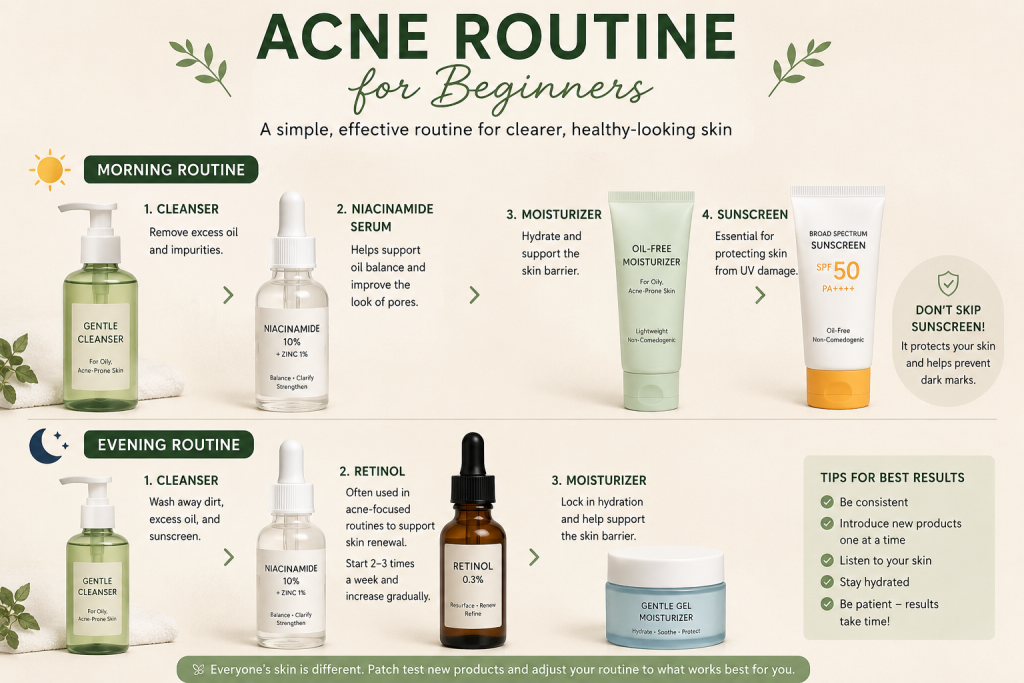
Acne Routine for Beginners: A Simple Skincare Guide for Acne-Prone Skin
New to skincare? Learn how to build an acne routine for beginners with simple steps, including cleanser, niacinamide, retinol, and sunscreen for healthier-looking skin.
A Simple Step-by-Step Guide for Clearer-Looking Skin
Acne can be frustrating, especially when you’re not sure where to start. With so many products and skincare trends available, building an effective routine can feel overwhelming.
Routine for Acne Prone Skin
Fortunately, is that a beginner acne routine doesn’t need to be complicated. In fact, using too many products at once can sometimes do more harm than good.
Instead, focus on a few key skincare steps. By doing so, you’ll create a routine that is easier to follow consistently.
In this guide, we’ll walk you through a beginner-friendly acne routine and explain the role of important skincare ingredients like niacinamide, retinol, and sunscreen.
What Causes Acne?
Acne develops when pores become clogged with excess oil, dead skin cells, and bacteria. While breakouts can affect people of all ages, they are especially common among those with oily or acne-prone skin.
Several factors may contribute to acne, including:
- Excess oil production
- Hormonal changes
- Clogged pores
- Certain skincare products
- Stress and lifestyle factors
As a result, pores can become clogged, leading to breakouts and blemishes. However, a consistent skincare routine can help support clearer-looking skin over time.
The Best Acne Routine for Beginners
If you’re new to skincare, start with the basics.
Morning Routine
Step 1: Use a Gentle Cleanser
First, Begin your day with a gentle cleanser to remove excess oil and impurities that build up overnight.
Look for:
- Non-comedogenic formulas
- Gentle cleansing ingredients
- Products suitable for acne-prone skin
Avoid harsh scrubs, as they may irritate the skin and worsen breakouts.
Step 2: Apply a Niacinamide Serum
In addition, niacinamide is one of the most beginner-friendly skincare ingredients for acne-prone skin.
Benefits of niacinamide include:
✓ Helps support oil balance
✓ Supports the skin barrier
✓ Helps improve skin texture
✓ Suitable for daily use
✓ Works well with most skincare routines
Because of these benefits, niacinamide is often recommended for oily and acne-prone skin types.
If you’re interested in adding this ingredient to your routine, check out our guide to the Best Niacinamide Serums for Oily Skin.
Step 3: Apply a Lightweight Moisturizer
Many beginners skip moisturizer because they worry it will make their skin oilier.
However, keeping your skin hydrated is important for maintaining a healthy skin barrier.
Choose a lightweight, non-greasy moisturizer designed for oily or acne-prone skin.
Step 4: Apply Sunscreen
Sunscreen is one of the most important steps in any acne routine.
Benefits of daily sunscreen include:
✓ Helps protect skin from UV damage
✓ Supports overall skin health
✓ Helps prevent the appearance of post-acne discoloration from becoming more noticeable
✓ Essential when using active ingredients like retinol
Choose a broad-spectrum SPF 30 or higher every morning.
For product recommendations, read our guide to the Best Sunscreens for Oily Skin.
Evening Routine
Step 1: Cleanse Your Skin
At night, remove sunscreen, dirt, and excess oil using a gentle cleanser.
This helps prepare your skin for the rest of your skincare routine.
Step 2: Introduce Retinol Gradually
Retinol is often used in acne-focused routines because it supports skin renewal and helps improve overall skin texture.
However, beginners should start slowly.
A beginner schedule might look like:
Week 1–2:
- Monday
- Thursday
Week 3–4:
- Monday
- Wednesday
- Friday
Remember:
✓ Use only a pea-sized amount
✓ Apply at night
✓ Follow with moisturizer
✓ Wear sunscreen every morning
If you’re new to retinol, read our Retinol Beginner Guide for a complete introduction.
Step 3: Moisturize
Finish your evening routine with a lightweight moisturizer to help support your skin barrier and reduce dryness.
Consistency is more important than using many products.
Common Acne Skincare Mistakes
Using Too Many Products at Once
Adding multiple active ingredients at the same time can irritate the skin.
Instead, introduce new products gradually.
Picking or Squeezing Pimples
Although it can be tempting, picking at acne may increase irritation and make marks more noticeable.
Skipping Moisturizer
Hydration is essential, even for oily skin.
Forgetting Sunscreen
Many people focus on acne treatments while neglecting sun protection.
Daily sunscreen should always be part of your routine.
How Long Does It Take to See Results?
Skincare requires patience.
While some people notice improvements within a few weeks, significant changes often take several weeks or months of consistent use.
Focus on building sustainable habits rather than looking for overnight results.
Conclusion
Building an acne routine for beginners doesn’t have to be complicated. Start with a gentle cleanser, add niacinamide to help support oil balance, introduce retinol gradually, and wear sunscreen every day.
Most importantly, stay consistent.
Healthy-looking skin is often the result of small daily habits repeated over time.
Frequently Asked Questions
What is the best acne routine for beginners?
A simple routine includes a gentle cleanser, niacinamide serum, moisturizer, sunscreen in the morning, and retinol at night.
Is niacinamide good for acne-prone skin?
Niacinamide is a popular skincare ingredient that helps support oil balance and overall skin health.
Can beginners use retinol for acne?
Yes. Beginners should start slowly and gradually increase usage as their skin adjusts.
Do I need sunscreen if I have acne?
Yes. Sunscreen is essential for protecting your skin and is especially important when using retinol.
How many skincare products should beginners use?
Begin with a simple routine and focus on consistency rather than using multiple products simultaneously.
Can oily skin still use moisturizer?
Absolutely. Lightweight moisturizers can help support the skin barrier without feeling greasy.
Leave a Reply