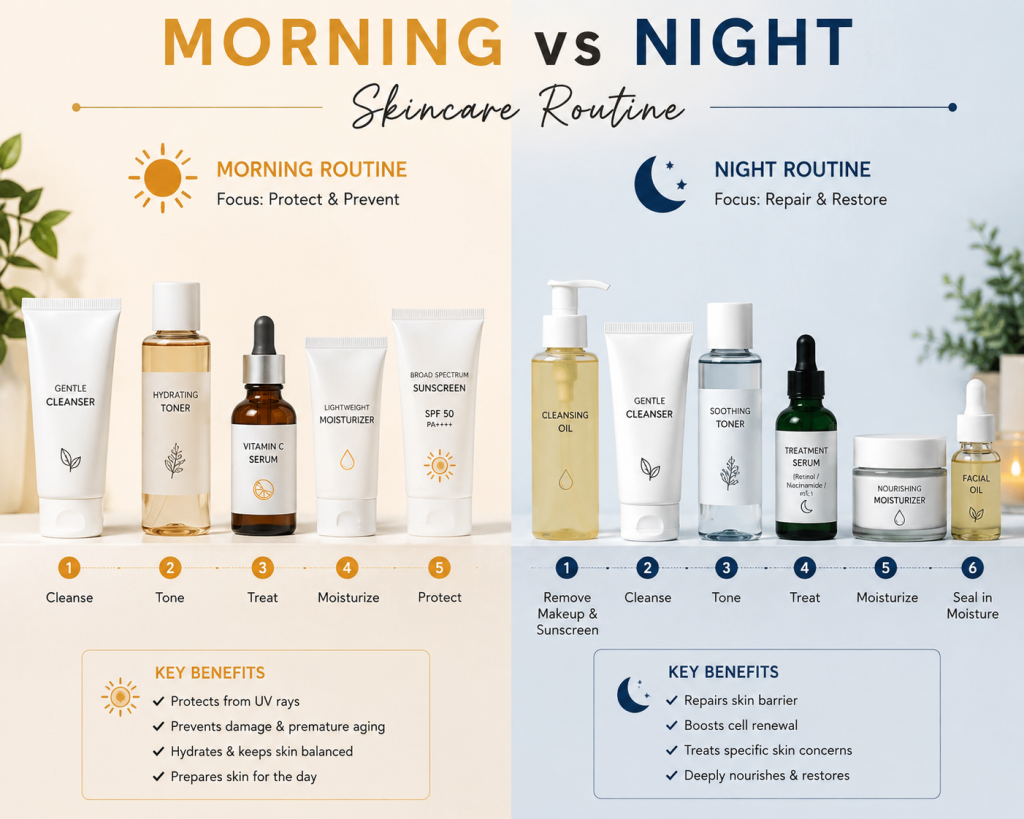
What’s the Difference and Why It Matters
If you’re new to skincare, one of the most confusing things is figuring out whether your morning and night routines should be the same or different. However, the truth is that they serve completely different purposes. In fact, your skin behaves differently during the day compared to at night when it is in repair mode.
Understanding the difference between a morning and nighttime skincare routine is essential for achieving healthy, clear, and glowing skin. In this guide, you’ll learn exactly what each routine does, what steps to follow, and how to build a simple routine that actually works.
What Is a Morning Skincare Routine?
A morning skincare routine is mainly focused on protection and prevention. During the day, your skin is constantly exposed to harmful environmental stressors such as sunlight, pollution, dirt, and bacteria. Therefore, the goal is to protect your skin barrier and keep it hydrated throughout the day.
Basic Morning Skincare Routine Steps
1. Cleanser
First and foremost, start your morning routine with a gentle cleanser. This helps remove excess oil and sweat that may have built up overnight. However, if you have very dry skin, you can simply rinse with water or use a very mild cleanser.
2. Toner (Optional)
Next, you may apply a toner. While this step is optional, it can help balance your skin’s pH and prepare it for better absorption of skincare products. Additionally, hydrating toners are great for dry or sensitive skin.
3. Serum (Optional but Recommended)
After that, you can apply a serum. For example, Vitamin C serum is commonly used in the morning because it helps brighten the skin and protects against environmental damage caused by free radicals.
4. Moisturizer
Then, apply a lightweight moisturizer to lock in hydration. This step ensures your skin stays soft and balanced throughout the day.
5. Sunscreen (MOST IMPORTANT STEP)
Finally, and most importantly, apply sunscreen. Sunscreen protects your skin from harmful UV rays, premature aging, hyperpigmentation, and even skin cancer. In fact, skipping sunscreen can undo all your skincare efforts. Therefore, it should never be skipped—even on cloudy days or indoors. Check out our beginner guide to learn more about the best sunscreen for oily skin.
What Is a Night Skincare Routine?
On the other hand, a night skincare routine focuses on repair, treatment, and recovery. While you sleep, your skin naturally goes into regeneration mode, meaning it repairs damage and rebuilds itself.
Because of this, nighttime is the best time to use active ingredients that support skin renewal.
Basic Night Skincare Routine Steps
1. Cleanser (Double Cleanse if needed)
To begin with, cleanse your skin thoroughly. At night, it is especially important to remove sunscreen, makeup, dirt, and oil. If you wear makeup or heavy sunscreen, double cleansing is highly recommended.
2. Toner (Optional)
Similarly, you can use a toner to soothe and hydrate the skin after cleansing. This step helps prepare your skin for treatment products.
3. Treatment Products (Most Important Step at Night)
This is where active ingredients come in. Depending on your skin concerns, you may use:
- Retinol (anti-aging and acne control)
- Niacinamide (oil control and brightening)
- Salicylic acid (acne and clogged pores)
However, it is important not to overload your skin. Instead, start with one or two actives to avoid irritation.
Discover more about retinol and niacinamide by checking out the retinol beginner guide and niacinamide serums for oily skins
4. Moisturizer
After treatments, apply a nourishing moisturizer. This helps repair the skin barrier and keeps your skin hydrated overnight.
5. Facial Oil (Optional)
If your skin feels very dry, you can seal everything in with a facial oil for extra hydration.
Key Differences Between Morning and Night Skincare Routine
To make it even clearer, here is a simple comparison:
| Morning Routine | Night Routine |
| Focus on protection | Focus on repair |
| Sunscreen is essential | No sunscreen needed |
| Lightweight products | Richer and treatment-based products |
| Vitamin C often used | Retinol and actives often used |
| Prevents damage | Repairs existing damage |
Common Skincare Mistakes to Avoid
Even if you follow a routine, mistakes can slow down your results. Therefore, avoid the following:
- Skipping sunscreen in the morning
- Using retinol in the morning instead of at night
- Applying too many active ingredients at once
- Sleeping without removing sunscreen or makeup
- Expecting instant results (skincare takes time and consistency)
Simple Beginner Skincare Routine Example
If you are just starting out, you don’t need a complicated routine. Instead, keep it simple:
Morning Routine:
- Gentle cleanser
- Moisturizer
- Sunscreen
Night Routine:
- Cleanser
- Moisturizer
- One treatment product (such as retinol or niacinamide)
Conclusion
In conclusion, the difference between morning and night skincare routines comes down to one simple concept: protection vs repair. Morning skincare protects your skin from daily damage, while night skincare helps your skin recover and renew itself.
Ultimately, the key to healthy skin is consistency, not complexity. Start with a simple routine, stay consistent, and slowly introduce active ingredients as your skin becomes stronger and more balanced.
Frequently Asked Questions (FAQs)
1. Can I use the same products for morning and night skincare?
Yes, you can use some products like cleanser and moisturizer in both routines. However, treatments like retinol should only be used at night, while sunscreen is only used in the morning.
2. Do I really need both a morning and night routine?
Yes, ideally you should have both. Morning routines protect your skin, while night routines repair and treat skin concerns. Together, they give the best results.
3. What happens if I skip sunscreen?
Skipping sunscreen can lead to sun damage, premature aging, dark spots, and increased risk of skin cancer. Therefore, sunscreen is the most important step in any routine.
4. When will I see results from a skincare routine?
Generally, you may start noticing improvements within 4–6 weeks. However, consistent use over time gives the best long-term results.
5. Can beginners use active ingredients like retinol?
Yes, but beginners should start slowly. For example, use retinol 2–3 times per week at night and gradually increase usage as your skin adjusts.
Leave a Reply