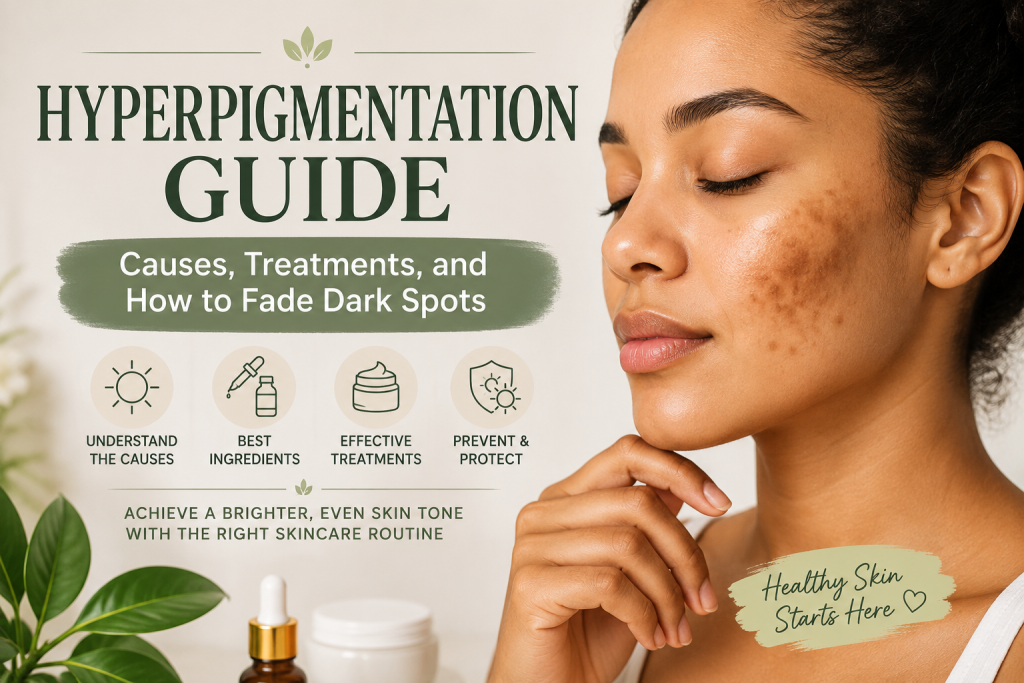
Looking for a complete hyperpigmentation guide? Learn what causes dark spots, the best ingredients for hyperpigmentation, and how to achieve a more even skin tone with a simple skincare routine.
Hyperpigmentation Guide
Have you ever noticed dark spots that seem to stay on your skin long after a breakout has healed? If so, you may be dealing with hyperpigmentation. Although hyperpigmentation is extremely common, it can be frustrating because it often takes time to fade.
Causes, Treatments, and How to Fade Dark Spots
Fortunately, with the right skincare routine and ingredients, you can improve the appearance of dark spots and achieve a more even skin tone. However, it is important to understand what causes hyperpigmentation before choosing a treatment.
In this hyperpigmentation guide, you’ll learn what hyperpigmentation is, what causes it, the best ingredients for treating it, and how to prevent it from coming back.
What Is Hyperpigmentation?
Hyperpigmentation is a skin condition that causes certain areas of the skin to become darker than the surrounding skin. This happens when the skin produces too much melanin, the pigment responsible for skin color.
As a result, dark patches or spots may develop on the face or body. While hyperpigmentation is generally harmless, many people look for ways to fade these marks and restore a more even complexion.
Hyperpigmentation can appear as:
- Acne marks
- Dark spots
- Sun spots
- Age spots
- Melasma
- Uneven skin tone
Although anyone can develop hyperpigmentation, some people are more prone to it than others.
What Causes Hyperpigmentation?
Understanding the cause of hyperpigmentation is essential because different causes may require different treatment approaches.
1. Sun Exposure
One of the most common causes of hyperpigmentation is sun exposure. When your skin is exposed to ultraviolet (UV) rays, it produces more melanin to protect itself.
Consequently, existing dark spots may become darker, and new spots may appear over time.
This is why daily sunscreen use is one of the most important steps in preventing hyperpigmentation.
Related Reading: Best Sunscreens for Oily Skin
2. Acne and Breakouts
Acne often leaves behind dark marks after the blemish has healed. This is known as post-inflammatory hyperpigmentation (PIH).
Furthermore, picking or squeezing pimples can make the discoloration worse and prolong healing.
Related Reading: Acne Routine for Beginners
3. Hormonal Changes
Hormonal fluctuations can trigger melasma, a common type of hyperpigmentation. This condition often appears as larger patches of discoloration on the cheeks, forehead, or upper lip.
4. Skin Irritation
Overusing strong skincare products can weaken the skin barrier. As a result, irritation may lead to inflammation and increased pigmentation.
Related Reading: How to Repair a Damaged Skin Barrier
Types of Hyperpigmentation
Although all forms of hyperpigmentation involve excess pigment, they do not all have the same cause.
Post-Inflammatory Hyperpigmentation (PIH)
PIH develops after inflammation caused by acne, eczema, burns, or other skin injuries.
Sun-Induced Hyperpigmentation
This type develops after years of sun exposure and is commonly known as age spots or sun spots.
Melasma
Melasma is usually linked to hormonal changes and often appears in larger patches rather than individual spots.
Best Ingredients for Hyperpigmentation
Fortunately, several skincare ingredients can help improve the appearance of dark spots.
Vitamin C
Vitamin C is one of the most popular ingredients for hyperpigmentation because it helps brighten the skin and promote a more even complexion.
Benefits include:
- Brightening dull skin
- Improving uneven skin tone
- Supporting antioxidant protection
Check out our article on the Best Vitamin C Serums for Beginners to learn more.
Niacinamide
Niacinamide is another beginner-friendly ingredient that may help reduce the appearance of discoloration.
Additionally, it supports the skin barrier and helps regulate oil production.
Check out our article on the Best Niacinamide Serums for Oily Skin to learn which one suits your skin best.
Retinol
Retinol encourages skin cell turnover. Therefore, it can help fade dark spots over time while improving skin texture.
Read our Retinol Beginner Guide to learn and discover more about Retinol, its importance and how to use it correctly.
Alpha Arbutin
Alpha arbutin is a popular brightening ingredient often used in hyperpigmentation routines.
Azelaic Acid
Azelaic acid can be particularly beneficial for acne-prone skin because it addresses both breakouts and post-acne marks.
How to Build a Hyperpigmentation Skincare Routine
When treating hyperpigmentation, consistency matters more than using numerous products.
Morning Routine
- Gentle Cleanser
- Vitamin C Serum
- Moisturizer
- Sunscreen SPF 30 or higher
Most importantly, never skip sunscreen. Otherwise, dark spots may become darker.
Evening Routine
- Cleanser
- Niacinamide or Retinol
- Moisturizer
If you are new to active ingredients, start slowly and introduce only one product at a time. Our article on Beginner Skincare Routine will help you if you are just starting the journey.
Why Sunscreen Is Essential for Hyperpigmentation
Many people spend money on serums and treatments but forget the most important step: sunscreen.
Without sunscreen:
- Existing dark spots may worsen
- New spots can develop
- Treatment results may be delayed
Therefore, applying sunscreen every day is one of the best things you can do for hyperpigmentation.
Check out our Best Korean Sunscreens for Oily Skin guide to learn more .
Common Hyperpigmentation Mistakes
Skipping Sunscreen
This is the biggest mistake people make when treating dark spots.
Using Too Many Active Ingredients
While active ingredients can be helpful, using too many at once can irritate the skin.
Picking Acne
Picking blemishes increases inflammation and often leads to post-inflammatory hyperpigmentation.
Expecting Overnight Results
Hyperpigmentation does not disappear overnight. Instead, improvement happens gradually with consistent skincare.
How Long Does Hyperpigmentation Take to Fade?
The timeline depends on several factors, including:
- Skin type
- Severity of discoloration
- Cause of hyperpigmentation
- Consistency of treatment
Generally, mild dark spots may begin improving within a few months. However, deeper pigmentation can take longer to fade.
Therefore, patience is essential when treating hyperpigmentation.
Conclusion
Hyperpigmentation is a common skin concern, but it can often be improved with the right approach. By using ingredients such as vitamin C, niacinamide, and retinol while protecting your skin with sunscreen, you can gradually achieve a brighter and more even complexion.
Above all, remember that consistency is key. Rather than searching for quick fixes, focus on building a simple routine that supports your skin every day.
Frequently Asked Questions (FAQs)
What is the fastest way to fade hyperpigmentation?
While there is no instant solution, ingredients such as vitamin C, niacinamide, retinol, and alpha arbutin may help improve dark spots over time when used consistently.
Can hyperpigmentation go away naturally?
In some cases, mild hyperpigmentation may fade naturally. However, skincare treatments and sunscreen often help speed up the process.
Does sunscreen help hyperpigmentation?
Yes. Sunscreen is one of the most important products for preventing existing dark spots from becoming darker.
Which ingredient is best for hyperpigmentation?
Vitamin C, niacinamide, retinol, alpha arbutin, and azelaic acid are among the most popular ingredients used for hyperpigmentation.
Can acne cause hyperpigmentation?
Yes. Acne is one of the leading causes of post-inflammatory hyperpigmentation, especially when blemishes are picked or squeezed.
How long does it take for dark spots to fade?
Most people notice gradual improvement within several weeks to months, depending on the severity of the pigmentation and their skincare routine.
Can beginners treat hyperpigmentation?
Absolutely. Beginners can start with a gentle routine that includes sunscreen, vitamin C, or niacinamide and gradually introduce stronger treatments if needed.
Leave a Reply