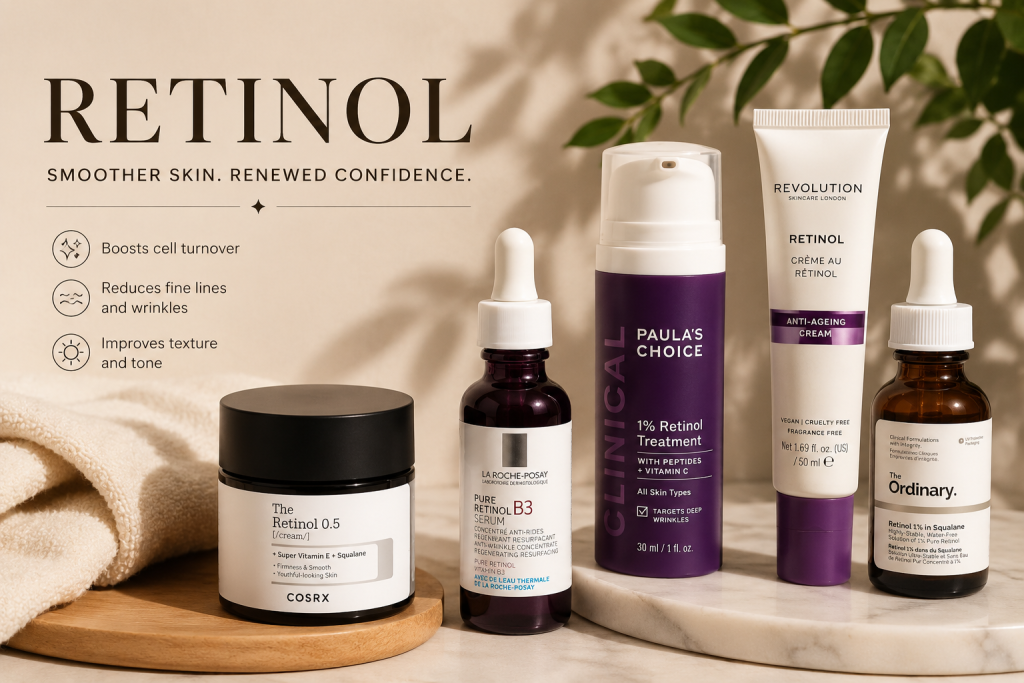
New to retinol? Discover how to safely incorporate retinol into your skincare routine, avoid common mistakes, and establish a beginner-friendly regimen for smoother, healthier-looking skin.
How to Start Using Retinol Without Irritation
Retinol is one of the most talked-about skincare ingredients and for good reason. It has become a staple in many skincare routines thanks to its ability to improve skin texture, reduce the appearance of fine lines, and support a clearer-looking complexion.
However, starting retinol can feel intimidating. Many beginners worry about dryness, peeling, or irritation. The good news is that with the right approach, most people can introduce retinol into their routine gradually and comfortably.
In this guide, we’ll cover everything beginners need to know about retinol, including how it works, how to use it safely, and common mistakes to avoid.
What Is Retinol?
Retinol is a form of vitamin A commonly used in skincare products. It belongs to a family of ingredients known as retinoids.
When applied consistently, retinol can help:
- Improve the appearance of fine lines and wrinkles
- Support smoother-looking skin
- Improve uneven skin tone
- Help reduce the appearance of post-acne marks
- Promote a more refined skin texture
Because retinol encourages skin renewal, it’s often considered one of the most effective over-the-counter skincare ingredients available.
Benefits of Retinol
1. Improves Skin Texture
Retinol encourages the natural renewal process of the skin, helping it appear smoother and more even over time.
2. Helps Minimize the Appearance of Fine Lines
Many people include retinol in their routines to support firmer, younger-looking skin.
3. Supports Clearer-Looking Skin
Retinol can help prevent pores from becoming congested, making it a popular choice for acne-prone skin.
4. Improves the Appearance of Dark Spots
With consistent use, retinol may help improve the appearance of uneven skin tone and post-acne discoloration.
How to Start Using Retinol
The biggest mistake beginners make is using too much, too soon.
Follow these steps instead.
Step 1: Start with a Low Strength
Choose a beginner-friendly formula designed for first-time retinol users.
Step 2: Use It Only 1–2 Times Per Week
Allow your skin time to adjust.
Example Schedule:
Week 1–2:
- Monday
- Thursday
Week 3–4:
- Monday
- Wednesday
- Friday
Step 3: Apply at Night
Retinol is typically used in an evening skincare routine.
A simple routine:
- Cleanser
- Moisturizer
- Retinol
- Moisturizer (optional)
Step 4: Wear Sunscreen Every Morning
Daily sunscreen is essential when using retinol.
Retinol can make your skin more sensitive to sun exposure, so apply a broad-spectrum sunscreen every day.
For oily skin,check out our guide to the best sunscreens for oily skin.
How Much Retinol Should You Use?
Less is more.
For your entire face, a pea-sized amount is usually enough.
Using more product will not necessarily produce faster results and may increase irritation.
Common Side Effects
Some beginners experience:
- Dryness
- Mild redness
- Flaking
- Tightness
These effects are often temporary while the skin adjusts.
If irritation becomes severe, reduce frequency or consult a qualified skincare professional.
Retinol Mistakes Beginners Should Avoid
Using Retinol Every Night Immediately
Start slowly and increase frequency gradually.
Skipping Moisturizer
Hydration helps support the skin barrier during the adjustment period.
Forgetting Sunscreen
Sunscreen should be part of every morning routine.
Applying Too Much Product
A pea-sized amount is sufficient.
Expecting Instant Results
Retinol takes time. Visible improvements often require several weeks or months of consistent use.
Beginner-Friendly Retinol Routine
Evening Routine
- Gentle Cleanser
- Moisturizer
- Retinol
- Moisturizer (optional)
Morning Routine
- Gentle Cleanser
- Moisturizer
- Sunscreen SPF 30+
Consistency is more important than using high-strength products.
When Will You See Results?
Results vary from person to person.
Many users begin noticing improvements in skin texture within several weeks, while concerns such as uneven tone and fine lines may take longer.
Patience and consistency are key.
Final Thoughts
Retinol can be an excellent addition to a skincare routine when introduced gradually and used consistently. Starting with a low strength, using it only a few times per week, and wearing sunscreen daily can help minimize irritation while allowing your skin time to adjust.
Some beginners also choose to use niacinamide alongside retinol because it can help support the skin barrier and balance excess oil. See our guide to the best niacinamide serums for oily skin for beginner-friendly options.
Remember that skincare results take time. Focus on consistency, listen to your skin, and make adjustments as needed.
Frequently Asked Questions
Can beginners use retinol?
Yes. Beginners can use retinol by starting with a low-strength product and introducing it gradually.
How often should beginners use retinol?
Most beginners start with one to two nights per week before increasing frequency.
Should I use retinol every night?
Not initially. Allow your skin time to adjust before increasing usage.
Can I use retinol with moisturizer?
Yes. Moisturizer can help reduce dryness and support the skin barrier.
Do I need sunscreen when using retinol?
Yes. Daily sunscreen is strongly recommended when using retinol.
What age should you start using retinol?
There is no single correct age. Many adults begin using retinol in their twenties or thirties, depending on their skincare goals.
Can retinol help with acne marks?
Retinol may help improve the appearance of post-acne marks and uneven skin tone over time.
Leave a Reply