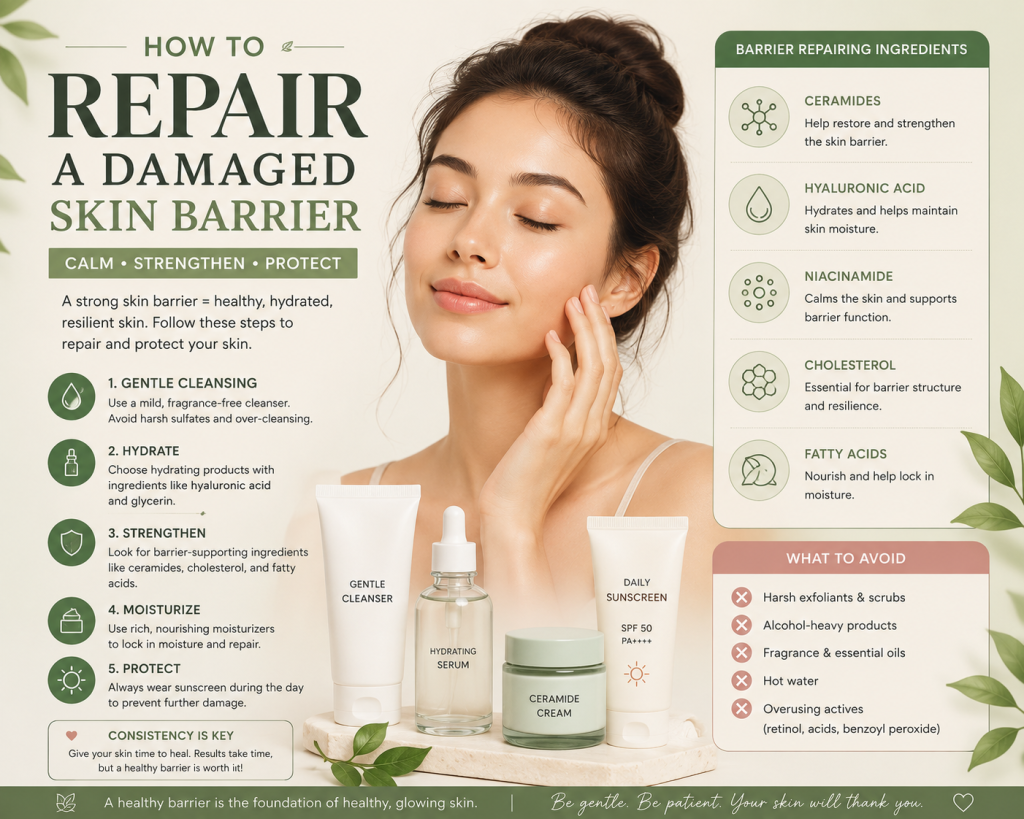
Learn how to repair a damaged skin barrier with simple skincare steps, barrier-supporting ingredients, and expert tips to restore healthy, hydrated skin.
If your skin suddenly feels dry, irritated, tight, or unusually sensitive, you may be dealing with a damaged skin barrier. Fortunately, with the right skincare routine and a little patience, it is possible to repair a damaged skin barrier and restore your skin’s natural balance.
A Beginner’s Guide to Healthy, Resilient Skin
Many people unknowingly damage their skin barrier by over-exfoliating, using too many active ingredients, or following overly complicated skincare routines. As a result, the skin becomes less effective at retaining moisture and protecting itself from environmental stressors.
In this guide, you’ll learn what a damaged skin barrier is, how to recognize the signs, and the best ways to repair your skin barrier for healthier, more resilient skin.
What Is the Skin Barrier?
The skin barrier, also known as the moisture barrier, is the outermost layer of your skin. It acts as a protective shield that helps keep moisture in while keeping irritants, bacteria, and environmental pollutants out.
When your skin barrier is healthy, your skin tends to feel smooth, comfortable, and hydrated. However, when it becomes damaged, a variety of skin concerns can appear.
Therefore, maintaining a healthy skin barrier is one of the most important aspects of any skincare routine.
Signs of a Damaged Skin Barrier
Before learning how to repair a damaged skin barrier, it’s important to recognize the symptoms.
Common signs include:
- Dry, flaky skin
- Increased sensitivity
- Redness and irritation
- Tightness after cleansing
- Burning or stinging when applying products
- Rough skin texture
- Unexpected breakouts
- Dehydrated-looking skin
If several of these symptoms sound familiar, your skin barrier may need some extra support.
What Causes a Damaged Skin Barrier?
Several factors can weaken your skin’s protective barrier.
Over-Exfoliation
One of the most common causes is using exfoliating products too frequently. While exfoliation can be beneficial, excessive use may strip away the skin’s natural protective layer.
Too Many Active Ingredients
Many beginners introduce multiple treatment products at once. For example, combining retinol, salicylic acid, and exfoliating acids without proper guidance can overwhelm the skin.
If you’re new to active ingredients, check out our Retinol Beginner Guide to learn how to introduce treatments safely.
Harsh Cleansers
Strong cleansers can remove essential oils that help maintain the skin barrier.
Environmental Factors
Cold weather, low humidity, excessive sun exposure, and pollution can all contribute to skin barrier damage.
Skipping Sunscreen
Daily sun exposure can weaken the skin barrier over time. Therefore, sunscreen remains one of the most important skincare products for long-term skin health.
For lightweight options, see our guide to the Best Sunscreens for Oily Skin.
How to Repair a Damaged Skin Barrier
The good news is that repairing a damaged skin barrier doesn’t require a complicated routine. In fact, simplifying your skincare routine is often the best place to start.
1. Simplify Your Skincare Routine
First and foremost, reduce the number of products you’re using.
Instead of applying multiple treatments, focus on the basics:
- Gentle cleanser
- Moisturizer
- Sunscreen
This approach gives your skin time to recover without additional stress.
2. Stop Overusing Active Ingredients
If your skin feels irritated, consider taking a temporary break from:
- Retinol
- Exfoliating acids
- Strong acne treatments
- High-strength vitamin C products
Once your skin barrier improves, you can gradually reintroduce these ingredients.
3. Focus on Hydration
Hydration plays a major role in skin barrier repair.
Look for products containing:
- Hyaluronic acid
- Glycerin
- Panthenol
- Aloe vera
These ingredients help attract and retain moisture, allowing the skin to recover more effectively.
4. Use Barrier-Supporting Ingredients
Certain skincare ingredients are particularly beneficial for repairing a damaged skin barrier.
Ceramides
Ceramides help strengthen the skin’s natural protective layer and reduce moisture loss.
Niacinamide
Niacinamide is known for supporting the skin barrier while helping improve oil balance.
If you’re interested in adding this ingredient to your routine, explore our guide to the Best Niacinamide Serums for Oily Skin.
Fatty Acids
Fatty acids help nourish and reinforce the skin barrier.
Cholesterol
Many barrier-repair moisturizers contain cholesterol to support skin recovery.
5. Choose a Gentle Cleanser
A gentle cleanser can make a significant difference during the healing process.
Avoid:
- Strong foaming cleansers
- Harsh scrubs
- Cleansers containing high levels of alcohol
Instead, choose a cleanser that cleans the skin without leaving it feeling tight or dry.
6. Moisturize Consistently
Applying moisturizer regularly helps support the skin barrier while reducing water loss.
For best results:
- Moisturize after cleansing
- Apply moisturizer morning and night
- Choose products suited to your skin type
Consistency is key when repairing barrier damage.
7. Wear Sunscreen Every Day
Sunscreen protects your recovering skin from additional damage caused by UV exposure.
Look for:
- Broad-spectrum protection
- SPF 30 or higher
- Lightweight formulas if you have oily skin
Even if you’re indoors most of the day, daily sunscreen remains an important step.
A Simple Skin Barrier Repair Routine
If you’re unsure where to start, try this beginner-friendly routine.
Morning Routine
- Gentle Cleanser
- Hydrating Moisturizer
- Sunscreen SPF 30+
Evening Routine
- Gentle Cleanser
- Barrier Repair Moisturizer
While it may feel overly simple, minimizing irritation is often the fastest way to repair a damaged skin barrier.
How Long Does It Take to Repair a Damaged Skin Barrier?
Recovery time varies depending on the severity of the damage.
Generally:
- Mild barrier damage may improve within a few days to two weeks.
- Moderate damage may take several weeks.
- Severe damage may require several months of consistent care.
Therefore, patience is essential. Avoid introducing new products too quickly during the healing process.
Common Mistakes to Avoid
Continuing Irritating Products
Many people continue using products that contributed to the problem in the first place.
Over-Cleansing
Washing your face too frequently can further weaken the skin barrier.
Skipping Moisturizer
Even oily skin benefits from proper hydration.
Chasing Quick Fixes
Skin barrier repair takes time and consistency.
How to Prevent Future Skin Barrier Damage
Once your skin has recovered, it’s important to maintain healthy habits.
Introduce New Products Slowly
Add one new product at a time and monitor how your skin responds.
Follow a Consistent Routine
A simple skincare routine often delivers better long-term results than a complicated one.
Use Active Ingredients Responsibly
Whether you’re using retinol, vitamin C, or acne treatments, moderation is key.
Prioritize Daily Sunscreen
Sun protection remains one of the best investments you can make in your skin’s health.
Conclusion
Learning how to repair a damaged skin barrier is often less about adding more products and more about simplifying your routine. By focusing on gentle cleansing, hydration, barrier-supporting ingredients, and daily sunscreen, you can help your skin recover and become more resilient over time.
Most importantly, be patient. Healthy skin is built through consistency, and giving your skin time to heal is one of the best things you can do.
Frequently Asked Questions
What are the signs of a damaged skin barrier?
Common signs include dryness, redness, irritation, tightness, flaking, sensitivity, and unexpected breakouts.
How long does it take to repair a damaged skin barrier?
Mild damage may improve within one to two weeks, while more severe cases can take several weeks or months.
Can niacinamide help repair the skin barrier?
Yes. Niacinamide is often used to support skin barrier function and improve overall skin health.
Should I stop using retinol if my skin barrier is damaged?
In many cases, temporarily pausing retinol can help reduce irritation while your skin recovers.
Can oily skin have a damaged skin barrier?
Absolutely. Even oily skin can experience dehydration, irritation, and barrier damage.
What ingredients help repair the skin barrier?
Ceramides, niacinamide, hyaluronic acid, glycerin, fatty acids, and cholesterol are commonly used to support barrier repair.
Should I exfoliate while repairing my skin barrier?
It’s generally best to minimize or pause exfoliation until your skin barrier has recovered.
Is sunscreen important when repairing a damaged skin barrier?
Yes. Daily sunscreen helps protect your skin from additional environmental damage while it heals.
Leave a Reply